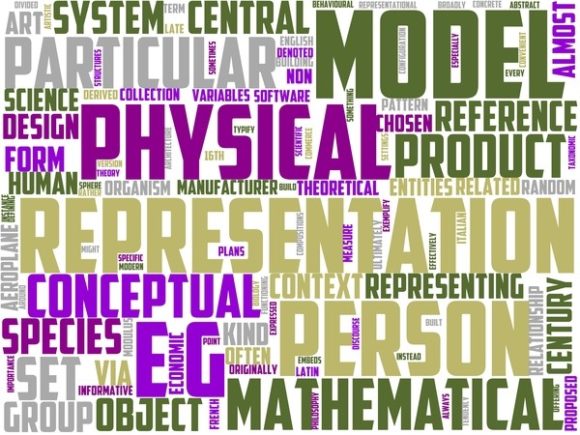
Models Wordart Crafting: A Practical Guide for Designers and Makers
Models Wordart Crafting refers to a collection of hand-drawn, colorful wordcloud-style design assets—curated typographic compositions where words are arranged organically by size, weight, and placement to form a visually balanced, thematic shape. Unlike algorithmically generated word clouds, these are manually illustrated, emphasizing artistic intent, legibility, and aesthetic cohesion. They are delivered as high-resolution, scalable vector or PNG files, optimized for both digital and print use across a wide range of physical and digital applications.
Why Designers and Crafters Explore Models Wordart Crafting
Designers, small-business owners, educators, and hobbyists often seek flexible, expressive typography that conveys meaning without relying on photography or complex illustration. Models Wordart Crafting meets this need by offering ready-to-use, hand-crafted word arrangements centered around themes like “Joy,” “Growth,” “Adventure,” “Mindfulness,” or “Celebrate.” These aren’t generic text blocks—they’re intentional visual statements designed to evoke mood, support messaging, and integrate seamlessly into layered layouts.
Interest typically arises when creators need to:
- Add personality and warmth to product packaging or apparel without custom lettering;
- Develop cohesive branding elements (e.g., stickers, tags, or textile prints) with consistent tone and visual rhythm;
- Produce multiple variations of promotional materials—such as invitations, flyers, or social media graphics—efficiently;
- Incorporate meaningful language into home décor or stationery while preserving handmade appeal.
Key Benefits and Realistic Expectations
The primary benefit of Models Wordart Crafting lies in its hybrid nature: it combines the expressiveness of hand-drawn art with the practicality of reusable design assets. Because each wordcloud is crafted—not generated—it avoids the visual clutter and uneven hierarchy common in automated tools. Words are sized and spaced to guide the eye, maintain readability at various scales, and support color coordination across projects.
However, users should expect certain tradeoffs:
- Customization limits: While colors can be adjusted in most editing software, repositioning individual words or altering wording usually requires vector-editing proficiency—and may compromise the original balance.
- Thematic specificity: Each design is built around a fixed set of words. If your project needs different vocabulary (e.g., swapping “Courage” for “Resilience”), the asset may not adapt without significant modification.
- Licensing scope: Usage rights vary by vendor. Some licenses permit commercial use on physical goods (e.g., mugs, t-shirts), while others restrict digital redistribution or resale of derivative works. Always verify terms before production.
When Models Wordart Crafting Is a Strong Fit
This approach works well in scenarios where authenticity, thematic clarity, and time efficiency intersect. For example:
- A boutique clothing brand launching a capsule collection themed around “Wanderlust” can apply a pre-designed wordcloud to fabric prints, hangtags, and Instagram posts—ensuring message consistency without commissioning custom illustrations for each format.
- An educator creating classroom posters about emotional literacy might select a hand-drawn “Feelings” wordcloud that balances accessibility and visual interest—more engaging than plain text, less resource-intensive than bespoke artwork.
- A stationery designer developing printable planners or gratitude journals benefits from modular, theme-based wordclouds that reinforce intentionality without requiring layout redesign for every page.
In all cases, success depends less on novelty and more on alignment between the asset’s inherent tone and the project’s communication goals. A playful, multicolored “Play” wordcloud suits children’s products; a muted, serif-based “Stillness” composition better serves wellness branding.
When Alternatives May Be More Appropriate
Models Wordart Crafting is not universally optimal. Consider alternatives if:
- You require precise linguistic control. If messaging must reflect specific brand voice, jargon, or localized phrasing, custom typography or commissioned lettering offers greater fidelity.
- Your workflow relies heavily on dynamic content. Marketing teams automating social posts or email campaigns may find static wordclouds less adaptable than editable text layers or generative tools with API integration.
- Scalability across formats is non-negotiable. While many Models Wordart Crafting files include vector versions, some are raster-only. For large-scale signage or embroidery digitizing, native vector paths or font-based solutions provide more reliable output.
- Brand identity demands uniqueness. Widely distributed wordclouds—even hand-drawn ones—carry a risk of visual overlap across markets. In highly competitive niches, proprietary typographic systems offer stronger differentiation.
Making an Informed Decision
Evaluating Models Wordart Crafting begins with clarifying your core need: Is the goal to communicate a concept quickly and warmly? To reinforce a recurring theme across touchpoints? Or to reduce illustration costs without sacrificing craft?
If yes, review available collections for:
- Visual harmony: Do line weight, spacing, and contrast support legibility at intended sizes? Test mockups at 25% scale to simulate small-print applications like tags or magnets.
- Color flexibility: Are files provided in layered formats (e.g., transparent PNGs or separated vector swatches) that allow hue swaps without affecting texture or stroke integrity?
- Format compatibility: Does the file type match your production pipeline? Print designers need CMYK-ready vectors; digital creators may prioritize RGB PNGs with transparency.
- Licensing clarity: Does the license explicitly cover your intended use case—especially if selling physical goods or distributing digital templates?
Also consider how the asset fits within your broader design system. Does it complement existing fonts, iconography, and color palettes—or introduce unintended stylistic tension? A single wordcloud shouldn’t carry the full weight of brand recognition, but it should reinforce established cues.
Finally, assess long-term utility. A well-chosen Models Wordart Crafting asset can serve across seasons and campaigns—if its theme remains relevant. But avoid over-indexing on trend-driven phrases (“Vibes,” “Slay”) unless they align with durable brand values. Timelessness, not virality, supports sustained reuse.
In summary, Models Wordart Crafting offers a thoughtful middle ground between fully custom design and templated graphics. Its value emerges not from novelty, but from intentionality—hand-drawn care translated into versatile, communicative form. Whether you're screen-printing tote bags or designing e-book chapter headers, its suitability hinges on matching artistic execution to functional need—and verifying that fit before committing to implementation.